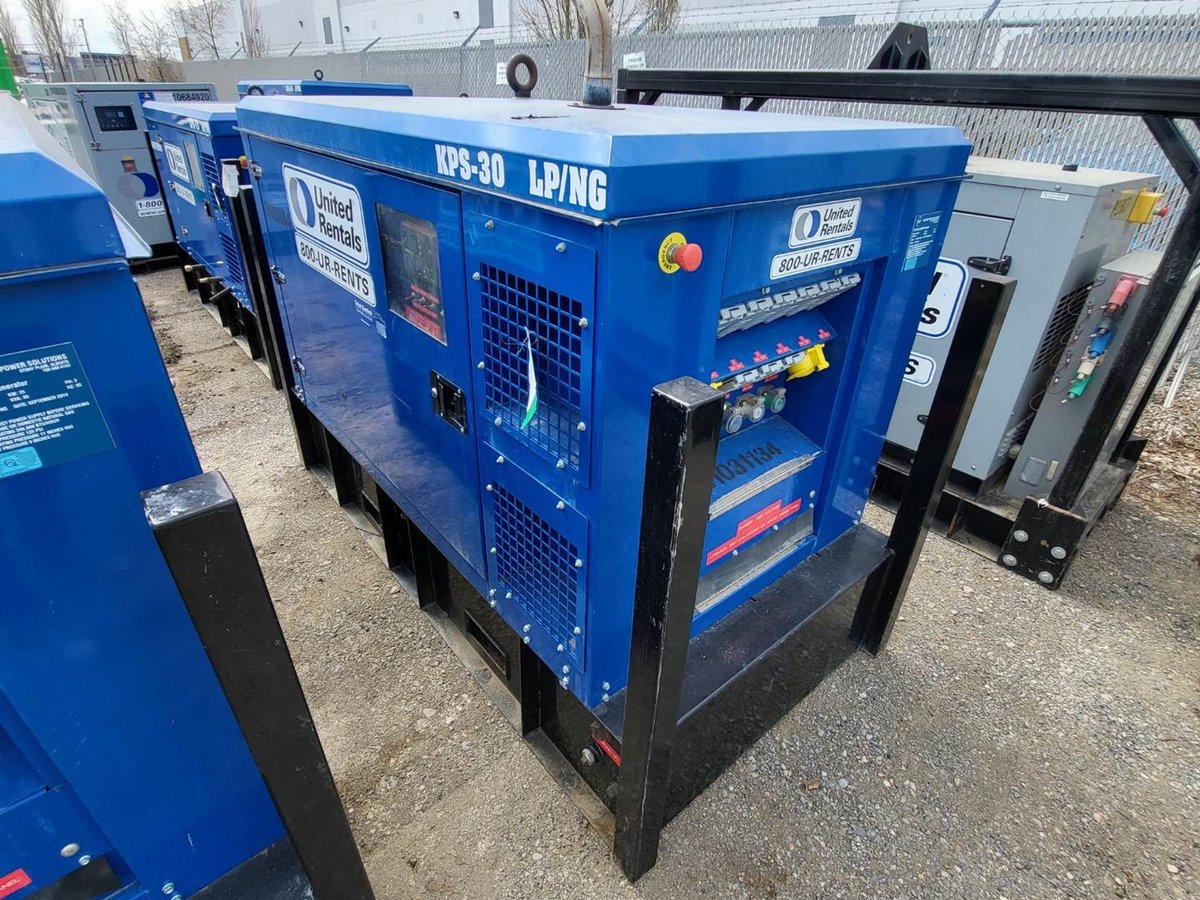
When the lights go out, whether it's a momentary flicker or a prolonged blackout, the silence can be unsettling. For homes, businesses, and essential services alike, reliable backup power isn't just a convenience—it's a critical lifeline. While small portable units might suffice for a few essentials, and colossal industrial generators handle massive loads, the 30kW generator often emerges as a powerful, versatile workhorse. But is it the right solution for your needs? This comprehensive guide dives deep into comparing 30kW generators to other power solutions and sizes, helping you navigate the options and make an informed decision.
At a Glance: Choosing Your Generator
- 30kW (or 30kVA) generators offer a robust balance of power and efficiency, ideal for larger homes, small to medium businesses, and workshops.
- Your choice hinges on three factors: how frequently outages occur, how long they typically last, and your precise power demands.
- Portable generators are great for flexibility and smaller needs, but require manual setup and frequent refueling.
- Inverter generators are quieter and more fuel-efficient, offering clean power for sensitive electronics, but generally max out at lower wattages than conventional portables.
- Home standby (whole-house) generators provide seamless, automatic power for your entire property, running on natural gas or propane, but come with significant installation costs.
- Correct sizing is paramount. Too small, and you'll trip breakers; too large, and you waste fuel and money.
- Safety is non-negotiable: Always use CO safety technology, operate outdoors, and keep exhaust clear.
The Unseen Battle: Why Power Reliability Matters
Power outages are more than just an inconvenience; they can disrupt daily life, compromise safety, and halt business operations. From severe weather events like hurricanes and ice storms to grid stress and localized equipment failures, the modern world demands a reliable energy backup. Generators bridge this gap, ensuring that everything from your refrigerator to your central air conditioning, your critical business servers to your well pump, continues to run smoothly.
But "generator" is a broad term. These machines vary dramatically in size, type, fuel efficiency, and cost. Understanding where a 30kW unit fits into this diverse landscape is key to making a smart investment.
Decoding Generator Sizes: Watts, Surges, and Your Real Needs
Choosing the right generator size isn't about guesswork; it's about precision. The biggest mistake people make is either underestimating their power needs or overshooting them dramatically.
Calculating Your Wattage: The Foundation
Start by listing every appliance, light, and system you want your generator to power. Then, find their running wattage (how much power they consume constantly). This information is usually on a label or in the owner's manual. Add these up to get your baseline total.
Don't Forget the Surge Factor
Here's where many people stumble. Appliances with motors—like refrigerators, air conditioners, sump pumps, and well pumps—require significantly more power for a brief moment when they first start up. This burst of extra power is called "surge watts" or "starting watts." Your generator must be able to handle these surges without tripping a breaker or straining the engine.
For example, a refrigerator might run at 800 watts but surge to 2,000 watts for a split second when the compressor kicks in. An air conditioner could require 1,500 running watts but a whopping 4,500 surge watts. It's crucial to account for the highest surge demand of all the motor-driven appliances you anticipate running simultaneously.
The Goldilocks Principle: Finding What's "Just Right"
You might think a bigger generator is always better, but that's not necessarily true.
- Undersizing means your generator won't be able to handle your essential loads, leading to frustrating trips and potential damage to the unit or your appliances.
- Oversizing, especially with portable units, can lead to significant fuel waste. A large portable generator, for instance, might guzzle around 20 gallons of gasoline per day if it's much larger than what's truly needed. Larger generators also have higher upfront costs and often require more complex installation.
The goal is to match the generator's capacity as closely as possible to your maximum expected load, including those crucial surge watts. This ensures efficiency, longevity, and cost-effectiveness.
Your Outage Scenario, Your Generator Solution
The best generator for you largely depends on how often you experience power outages and for how long. Think of your generator as an insurance policy—the premium you pay (in cost and effort) should align with your risk.
Frequent or Prolonged Outages: Total Home/Business Resilience
Scenario: You live in an area prone to severe weather, an aging power grid, or have critical operations that cannot afford even a minute of downtime.
Recommended Solutions: A home standby generator, or a large inverter/portable generator paired with a professionally installed transfer switch.
Capability: These solutions can power an entire household or a small business, connecting directly to your electrical panel to run hardwired appliances like central heat/AC, well/sump pumps, electric ranges, and water heaters.
Installation: Home standby generators require costly professional installation, which typically includes an automatic transfer switch. For large portable/inverter generators, a transfer switch installed by a licensed electrician is essential for safe and seamless connection to your home's wiring.
Where 30kW Fits: A 30kW generator often surpasses typical residential standby units (which max out around 20kW) and large portables (up to 8,500W). It becomes a strong contender for larger homes with significant electrical demands, or small businesses (e.g., convenience stores, offices, smaller factories/repair shops) that need more than just essential circuits to stay operational.
Occasional, Sustained Outages: Balancing Cost and Convenience
Scenario: Outages aren't an everyday occurrence, but when they hit, they can last for hours or even days. You want robust backup without the high upfront cost of a permanent standby system.
Recommended Solutions: A large inverter generator or a large portable generator.
Savings: You can save thousands compared to a home standby generator if you're willing to manually hook it up and refuel it.
Installation: While manual hook-up is an option, a transfer switch installation is still strongly recommended for safety and ease of use, especially if you plan to power major hardwired appliances.
Where 30kW Fits: For this scenario, if a single larger home or small commercial site needs substantial power that exceeds the typical 5,000-8,500W of a large portable or inverter, a 30kW unit provides significantly more capacity and often better fuel efficiency per kilowatt-hour, justifying the higher initial investment over multiple smaller units or constant refueling of less efficient portables.
Rare Outages: Peace of Mind for Essentials
Scenario: Power rarely goes out, but you want to ensure basic necessities like refrigeration, lighting, and charging capabilities are covered.
Recommended Solutions: A midsized inverter generator or a small inverter generator.
Capability: A midsized unit (2,000-3,500W) can keep your fridge running and power a window AC unit or space heater. Smaller models (up to ~2,000W) are compact and suitable for a fridge, lights, phone chargers, and small kitchen appliances. They're also great for camping or tailgating.
Limitations: These are typically 110-volt only and generally aren't suitable for powering well pumps or central heating/cooling systems. They cannot connect to a breaker panel for hardwired devices.
A Head-to-Head Look: 30kW vs. Other Generator Types
To truly appreciate the role of a 30kW generator, let's stack it up against the common alternatives.
Home Standby Generators (Up to 20,000W vs. 30kW)
- Wattage: Up to 20,000W for residential models. A 30kW generator provides 30,000 watts of power.
- Cost: $2,000-$6,000 (unit only) plus thousands more for complex professional installation.
- Pros (Standby): Permanently installed, automatic activation, uninterrupted power for entire home, runs indefinitely on natural gas/propane, no manual operation.
- Cons (Standby): Most expensive solution, cannot be installed in flood-prone areas, immovable.
- When 30kW Excels: While residential standby units are fantastic for automation, they often top out at 20kW. For larger luxury homes, estates, or small commercial operations that need more robust power than 20kW for all systems (multiple AC units, sophisticated home automation, commercial refrigeration, etc.), a 30kW unit becomes a more appropriate, though often still permanently installed, choice. The higher output handles a broader range of concurrent demands.
Large Portable Generators (Up to 8,500W vs. 30kW)
- Wattage: Up to 8,500W.
- Cost: $950-$2,000.
- Pros: High power for the cost, some can meet many home demands, can connect to a breaker panel with a transfer switch.
- Cons: Noisier than inverters/standby units, gasoline-only (high consumption, ~20 gallons/day for some), bulky (~250 lbs), requires protection from weather.
- When 30kW Excels: A 30kW unit represents a significant leap in raw power output compared to even the largest portable generators. While a large portable might keep a few major appliances running, a 30kW can sustain a much broader and heavier load continuously. This makes it suitable for extended outages at larger residences or small businesses where consistent, higher-tier power is non-negotiable and the limitations of a portable (refueling, noise, manual operation) become impractical.
Large Inverter Generators (5,000-7,500W vs. 30kW)
- Wattage: 5,000-7,500W.
- Cost: $1,300-$7,000.
- Pros: Runs refrigerator, lights, furnace/small central AC; connects to breaker panel for hardwired equipment; quiet, steady power for sensitive electronics; fuel-efficient.
- Cons: Expensive (high-performing models $1,800+), panel connection adds significant cost, requires stabilized gasoline.
- When 30kW Excels: Large inverter generators are excellent for their clean power and efficiency. However, their power output still falls significantly short of 30kW. If your sensitive electronics and variable loads require cleaner power and a much higher overall wattage—perhaps for multiple business critical systems or a full-scale home entertainment setup combined with central AC—a 30kW unit (often with advanced voltage regulation) can bridge that gap where a large inverter simply can't provide enough juice.
Midsized & Small Inverter Generators (2,000-3,500W & Up to ~2,000W)
- Wattage: 2,000-3,500W (midsized), Up to ~2,000W (small).
- Cost: $500-$2,400 (midsized), $450-$1,600 (small).
- Pros: Quiet, lightweight, efficient, no installation costs (small), easy storage/transport.
- Cons: Limited capacity, primarily for 110-volt items, not suitable for well pumps or most heating/cooling equipment, cannot connect to breaker panel.
- Why 30kW is a Different League: These smaller units are fantastic for basic needs or recreational use, but they are in an entirely different category than a 30kW generator. They can't power hardwired systems, handle significant motor loads, or provide continuous power for an entire home or business. The comparison here highlights the sheer jump in capability and purpose that a 30kW unit offers.
The 30kW Sweet Spot: Performance, Efficiency, and Practicality
A 30kW generator, often expressed as 30kVA (kilovolt-amperes), occupies a unique and crucial position in the power generation landscape. It's too robust for basic residential needs but often perfectly scaled for larger homes, small commercial enterprises, construction sites, and agricultural operations.
Fuel Efficiency & Operational Costs
One of the significant advantages of larger generators, including 30kW units, is their superior fuel efficiency per kilowatt-hour (kWh). Smaller generators might operate around 75% efficiency, while 30kVA units typically achieve around 85% conversion efficiency. This means less fuel wasted for the power produced.
- Optimal Load Range: For maximum efficiency and longevity, 30kVA generators perform best when operating at 70-80% of their full capacity. This reduces fuel burn and mechanical stress, significantly extending the generator's lifespan.
- Long-Term Savings: While upfront costs are higher, the long-term operational budget is significantly impacted by fuel consumption. A well-sized 30kW generator can offer better long-term fuel savings than several smaller, less efficient units trying to handle the same load.
Power Factor (PF): Understanding Electrical Efficiency
Power factor (PF) measures how effectively electrical power is being used. A PF close to 1 indicates highly efficient utilization. Most 30kVA units operate with a power factor between 0.8 and 0.9. This means that for every 30kVA of apparent power, you're getting approximately 24-27kW of usable real power. Understanding this distinction is important for precise load calculations.
Environmental Considerations: A Greener Future
30kVA generators offer a practical balance of power output and emissions. While smaller units produce less overall pollution, they consume fuel faster relative to their output. Larger generators, like a 30kW, can produce fewer emissions per hour due to less frequent starting and stopping when operating efficiently.
- HVO Fuel: Diesel is common and efficient for 30kW units, but Hydrotreated Vegetable Oil (HVO) is gaining traction. HVO offers similar performance to diesel but drastically reduces greenhouse gas emissions (around 90% lifecycle reduction), making it a powerful tool for sustainability goals. Compliance with evolving emission regulations is also a key consideration for these mid-range units.
Surge Power Capability: Handling the Start-Up Demand
Crucially, 30kVA models provide ample surge power for most small and mid-sized businesses. This capability allows them to reliably start and run multiple motor-driven pieces of equipment (think HVAC systems, refrigeration units, power tools, or well pumps) without being overwhelmed. While smaller generators struggle with surge demands, and larger industrial units handle them effortlessly at a much higher cost, a 30kW unit strikes an excellent balance between capacity and cost-effectiveness.
Lifespan & Reliability: Built to Last
With continuous use and proper maintenance, 30kVA generators are built for a long, reliable lifespan. They are often engineered with commercial-grade components, leading to fewer failures than smaller consumer-grade units and often less complexity than very large industrial generators. This makes them a dependable choice for medium-scale power needs where uptime is critical.
Commercial/Industrial Suitability: The Backbone of Small Business
This is where 30kW generators truly shine. They are exceptionally well-suited for:
- Small Businesses: Convenience stores, offices, doctor's clinics, and restaurants can keep operations running smoothly.
- Workshops & Smaller Factories: Powering machinery, lighting, and HVAC without excessive fuel waste.
- Agricultural Settings: Running pumps, ventilation, and essential farm equipment.
For sustained, heavy industrial loads or operations anticipating future expansion (e.g., large factories, major retail complexes), bigger generators (50-100kVA and beyond) perform better by handling complex power distribution and maintaining stable output more effectively. However, for a significant portion of the commercial sector, the 30kW unit hits that sweet spot. To dive deeper into what makes these units so versatile, you can Learn more about 30kW generators.
Making Your Choice: Key Considerations Beyond Size
Once you've narrowed down the general wattage, several other factors come into play:
- True Power Requirements (Revisited): Double-check your calculations, especially for any specialized equipment or future additions. Consider three-phase power if you're a business with heavy machinery.
- Phase Configuration: Many residential properties use single-phase power, while most commercial and industrial applications require three-phase power. A 30kW generator can often be configured for either, but it's a critical specification to get right.
- Noise Levels: Generators are loud. Standby generators are usually housed in sound-attenuating enclosures, but portables can be very noisy. Consider local noise ordinances and proximity to neighbors, especially for commercial installations.
- Available Space: Portable units need clearance; standby units require a concrete pad and clearance from buildings. A 30kW unit is substantial and needs dedicated space and proper ventilation.
- Budget Constraints: Factor in not just the upfront cost of the generator, but also:
- Installation: Electrical work (transfer switch, wiring), fuel line installation (natural gas/propane).
- Fuel Costs: Ongoing expenses, especially if using gasoline or diesel.
- Maintenance: Regular servicing to ensure reliability.
- Emission Regulations: Ensure your chosen generator complies with local, state, and federal emission standards, particularly if it's a permanent installation or for commercial use.
Generator Safety: Non-Negotiables for Every User
No matter what size or type of generator you choose, safety must always be your top priority. Accidents, often involving carbon monoxide poisoning or electrocution, are preventable.
- CO Safety Technology: Always choose portable generators equipped with Carbon Monoxide (CO) safety technology, which includes a built-in sensor that automatically shuts down the unit if CO levels become unsafe. This is a crucial life-saving feature.
- Regular Maintenance: Just like your car, generators need consistent maintenance. Check oil levels, fuel filters, spark plugs, and batteries. A well-maintained generator is a reliable generator.
- Never Operate Indoors: This includes garages, carports, sheds, or any partially enclosed space. Generators produce deadly carbon monoxide, an odorless, colorless gas.
- Maintain Distance: Operate generators at least 20 feet (6 meters) from your home or any other building.
- Direct Exhaust Away: Ensure the exhaust is directed away from windows, doors, air conditioning units, and vents to prevent fumes from entering your home or a neighbor's.
- Professional Installation: For any generator that connects directly to your home's electrical system (via a transfer switch), always use a licensed electrician. DIY electrical work can be incredibly dangerous and illegal.
Your Next Steps Towards Reliable Power
The world of generators, from a compact 2,000-watt inverter to a robust 30kW power plant, offers solutions for nearly every scenario. Your ideal choice isn't about finding the "best" generator, but the right generator for your specific situation.
Begin by meticulously assessing your true power requirements, factoring in both running and surge watts. Consider your personal tolerance for manual operation versus the desire for automatic, seamless backup. Balance your budget against the critical need for reliability and the potential costs of an extended outage.
Don't hesitate to consult with a licensed electrician or a generator expert. They can help you with precise load calculations, recommend suitable models, and ensure safe, compliant installation. With the right generator in place, you can face the next power outage with confidence, knowing you have a reliable backup plan.